





As Germany and Ethiopia mark 120 years of diplomatic relations, the partnership between the two nations continues to evolve across various areas, including development cooperation, investment, governance, and security. Germany has long been a steadfast supporter of Ethiopia, contributing to humanitarian response, education, infrastructure, and democratic reforms.
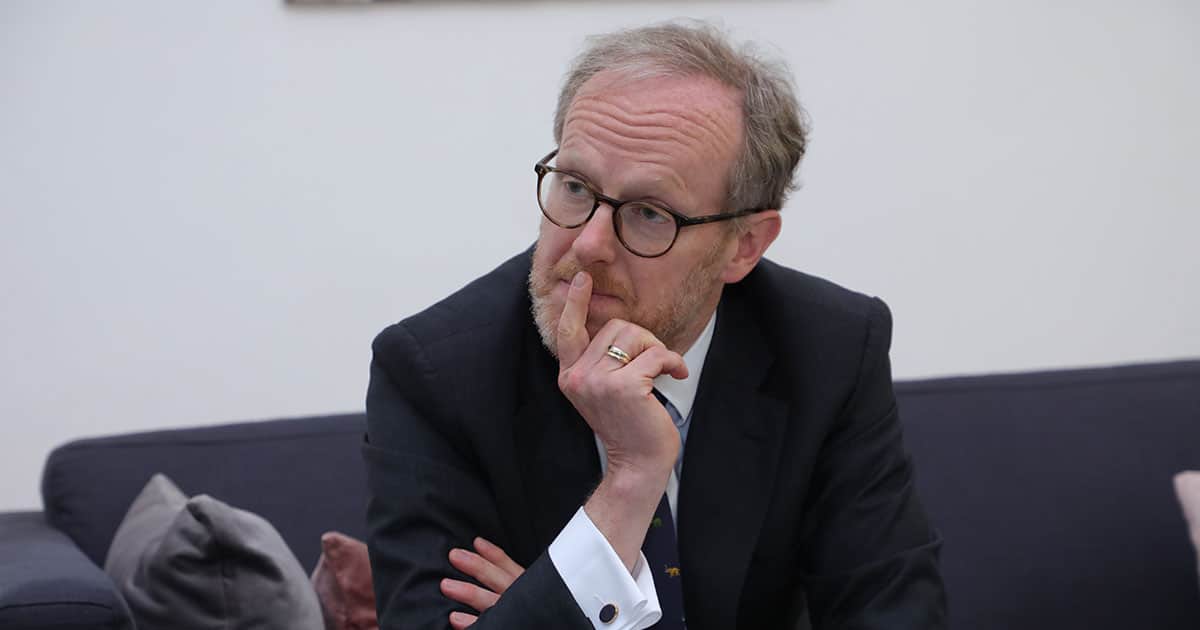
The Reporter’s Sisay Sahlu sat down with Dr. Ferdinand von Weyhe, Chargé d’Affairs a.i. of the German Embassy in Addis Ababa, to discuss Germany’s current role, its support for Ethiopia’s ongoing reforms, and the future of bilateral ties.
Dr. von Weyhe brings a wealth of experience to his post. Since 2023, he has served as Deputy Head of Mission in Addis Ababa, following senior leadership roles at the Federal Foreign Office in Berlin, where he headed both the Humanitarian Response Division (2021–2023) and the Rule of Law Promotion and Security Sector Reform Unit (2016–2021). His diplomatic career spans postings in Dhaka, St. Petersburg, Sofia, and Berlin, with expertise ranging from humanitarian response to governance and security reform.
His career reflects a blend of legal scholarship, humanitarian leadership, and diplomatic service across diverse regions. Against this backdrop, he shares insights on Germany’s priorities in Ethiopia, the challenges and opportunities in investment and security, and how the two countries can build on their 120-year legacy of cooperation. EXCERPTS:
The Reporter: The diplomatic relations between Ethiopia and Germany have a long history. What has been achieved over the past 120 years?
Dr. Ferdinand von Weyhe: Well, 120 years is indeed a very long time. When we speak of achievements, it is important to remember that the primary task of diplomacy is to enable and facilitate interactions between our two countries.
We have established a set of very strong pillars in the relationship between Germany and Ethiopia. If we highlight some core diplomatic achievements, one of the most significant was Emperor Haile Selassie’s visit to Germany in 1954. It was the first official visit to West Germany after the Second World War. Beyond such milestones, the role of the embassy and diplomacy is to build bridges—whether in business, culture, academia, or people-to-people exchange.
These exchanges are where we truly see achievements. The relationship is not abstract; it involves 80 million Germans and 130 million Ethiopians coming together, learning from one another, and making the best use of shared opportunities.
For example, the German Embassy School in Addis Ababa has been here for 70 years. Many Ethiopian children have studied there, and it continues to enrich our educational and cultural ties.
If we look even further back, beyond the 120 years of formal diplomatic relations, we find evidence of cooperation dating back 400 years. A notable example is the collaboration between the Ethiopian scholar Abba Gorgorios and the German scientist Hiob Ludolf. Together, they produced works on the Ge’ez language, Amharic, and the history of Abyssinia. This illustrates the deep and long-standing intellectual connections between our two nations.
Another important pillar is our cooperation in archaeology, which is almost as old as our diplomatic relations. Next year will mark 120 years since the Axum expedition. What is remarkable is that this cooperation is not only historical—it continues today. I had the privilege of visiting German archaeologists working in Yeha, near Adwa, where there is an impressive cultural site: the Temple of Yeha. We are proud to join hands in this ongoing work, which strengthens our shared heritage and partnership.
What are the current developments and are there any priorities regarding diplomatic relations?
Well, if you look over the years, I think in those days, and this goes for diplomats around the world, at the beginning of the 20th century, the first task was to have very high-level interaction with the authorities of the receiving country. I give you one example, my predecessor in the 1920s.
He had a very close relationship with the Ras Teferi [Mekonnen] and members of the imperial family were coming to his house, having lunch together, and maintaining a friendly relationship. You might be aware that some days ago, we had a wonderful celebration at the Institute of Ethiopian Studies, where several artefacts were donated to the Institute, which is part of Addis Ababa University. These artefacts were gifts from Ras Teferi 100 years ago to my predecessor.
So, we chose this very close interaction at the highest level. And then there was the task of supporting your own nationals. Both tasks are still relevant today.
But also, one stream of diplomatic support has always been business, which was relevant then and is still relevant today. I also mentioned the field of scientific cooperation. I think this has been, from the very beginning, an important pillar of interest, where diplomats supported expeditions to Aksum, just as we support archaeologists today working in Yeha or other places.
I think what has emerged as a new point of bilateral ties is development and economic cooperation, which only started after World War II and which today is also an important pillar of our bilateral relations.
The EU, specifically Germany, has been a very good supporter of Ethiopia’s development efforts and humanitarian issues. The Tigray war prompted a diplomatic backlash from the international community and EU members. What has changed since then, and how is the German government balancing this diplomatic relationship?
We make a clear distinction between humanitarian assistance and development cooperation. Humanitarian assistance is focused on people in need. So, we support people in need irrespective of government, regime, or conflict situation, across the globe.
It is a principled approach to humanitarian assistance: we assess how many people are in need, and we provide support. This applies to Germany, but also to many other countries that want to support people in need.
A second axis of interaction is development cooperation. For us, this is very important to make government-to-government, because we don’t want to carry out development actions in any country without working jointly with the government. It is more efficient, and most importantly, we don’t want to interfere in another country’s affairs without the agreement of its elected government.
Now, coming to the northern Ethiopia conflict, there was indeed a suspension of EU budget support. I want to stress that Germany also suspended its budget support, but we have now unblocked this support so it can flow again.
It will flow together with the DPO, the World Bank program. This is very important to emphasize, because we are doing this in respect and support of the macroeconomic reforms that have been undertaken. As a community with the IMF and World Bank, we have clearly signalled that we want to support Ethiopia’s macroeconomic reforms. This is why the IMF is spending a lot of money, this is why the World Bank is spending a lot of money, and as contributors, we are also in line with this by unfreezing our bilateral budget support to Ethiopia.
How is your government measuring the effectiveness of the support provided? For example, recently we have seen a large amount of money pledged by the German government: 205 million euros for support to the Ethiopian government and five million for UNDP’s peace efforts in Ethiopia.
Indeed, we have just pledged a lot of money. One part, I was just talking about it, the 100 million for the budget support, which had been subscribed already a couple of years back and has now been unfrozen because of the progress we saw with the macroeconomic reforms.
Then there is another 106 million, which is based on the recent development negotiations we had only last month in Berlin, where a delegation from Ethiopia went to Germany. This money is not budget support, but it is very specifically for jointly agreed programs and projects.
Now to your question, how do we measure, evaluate, monitor—we do all this. Well, every program, every project must not only be monitored, but also evaluated.
We have an institution for this in Germany. It is called Deval. This institute has the responsibility to evaluate our programs and projects undertaken in the field of development cooperation.
So, it is a very technical approach. If you have a project, then you have a log frame, then you define what your impact shall be, what your outcome shall be, what your output shall be, and what the indicators are.
And then, after or even during the program, we assess to what extent these goals have been attained.
Germany is known for initiating new projects in Ethiopia, which have been very successful, including in public housing, agriculture, and TVET schools. How do you evaluate the government of Germany’s endeavour to support Ethiopia in different sectors?
First, it is, of course, German taxpayers’ money. So, we must be very attentive to how it is spent and used. By and large, we are convinced that the programs—again, jointly designed by the German and Ethiopian governments—are very good.
And they have a good purpose. We all know that even as a company, you might have a good purpose and a good goal you want to attain, but it will not always succeed. This is also fair to acknowledge.
In the end, there are others to judge this, not the German acting ambassador. I see, for example, the Universities of Applied Sciences. I think this is something many people will associate with Germany and with German contributions.
The vocational schools are a very good example. The TVET system, which we attach great importance to, comes from our own experience in Germany. The important issue about the TVET system is the interaction between industry and the schooling system.
Because we all know that industry—I call it industry at large, it includes services, hotels, or whatever it is—the demand is changing rapidly. And if there is a school system saying, “Oh yes, we have this curriculum, and last year we had the same, and ten years ago we also had the same,” then the industry will say, “Yes, that is very nice, but we don’t work for history. We want somebody trained for our needs today.” And there is a lot of change.
So, it is very important to have this interaction between industry, the demand for the workforce, and the training institutes—the TVET system—so that TVET is training young people according to the needs of the labour market, and not according to some curriculum invented 20 years ago.
The vast majority of students have failed the university entrance exam in Ethiopia, and the government is pushing them to join TVET schools. Are there any plans to expand support for the TVET system?
I wouldn’t say expand, but we want to continue this path, because we consider it important, and based on our own experience, I think we can contribute here.
But again, I think most importantly—and this is why we always stress the interaction of the schools with industry, services, architecture, or whatever—is this cooperation between local demanders, local job providers, local employees, and the schools, to make it really top-notch and up-to-date.
How much are German companies investing in Ethiopia?
I can’t say, because the German embassy does not keep track of investors here in town or in the country.
So, it is only by chance, through those who come to the embassy for some issues, some problems, or just to say, “Hello, I’m here,” but we do not have any system where every German coming here must pass by the embassy and declare, “I want to invest so much money.”
So, I cannot give you exact figures. There is some investment in the field of agriculture, and some investment in Bole Lemi Park to produce specific materials. But, by and large, the investment is not big.
When I came here two years ago, I was wondering why this was the case. Talking to many businesses over time, having visited Dire Dawa this week and Hawassa Industrial Park, I tried to understand the problem: why is there not more FDI coming to Ethiopia? And I think, if you talk to businesses, and again, I’m just a diplomat, I don’t have to make money here, I don’t have to protect my investment, I don’t have to make a business case—we do see that they face a lot of problems and challenges.
The important issue is that a potential investor may come to the German Embassy to ask, “How is the situation? What can you tell me about the country you are serving? But the most important information he will get is from businesses already in the field, already active in Ethiopia. If they say, “Everything is very smooth, administration is good, we have a good legal framework, everything is fine,” then the investor will say, “Okay, this is a place where I will put my money, my intellectual capacity, and my technical equipment.”
But if the companies are saying, “We are facing administrative hurdles, we face insecurity, we have challenges with the tax system, or whatever,” then this investor will say, “Okay, better to spend my money in another country.”
The EU Chamber in Ethiopia recently spoke out about the challenges that EU businesses are facing. Are there any specific challenges for German companies?
This goes beyond investing. I think one challenge, in addition to what I just said above, is not what an investor might face, but what a buyer faces. It is also very important to bring in buyers to purchase Ethiopian products—not only coffee, which we all know about, but also other agricultural products—to increase the labour-intensive component of production here in Ethiopia. For example, buyers of garments from the industry.
Let me put two points here. One is that there is a huge opportunity for Ethiopian companies producing in Ethiopia—when I say Ethiopian, I am not referring to the passport, but to companies based here—because there is a European customs regime called ‘Everything But Arms.” This means that from Ethiopia to Europe, you can export everything except arms with no customs duties and no tariffs.
I think this is attractive and provides a great competitive advantage for products produced in Ethiopia. But those who want to source from Ethiopia, for example, garments, say they face two issues. The first is logistics. It is difficult, expensive, and time-consuming. They told me that it takes more time to ship garments from Ethiopia to the European market than from Southeast Asia to Europe, even though the distances are much greater from Asia. So, logistics is really an issue.
I think there has been a good step forward in opening the freight forwarding sector. It is very important to have more competition here, to bring in more freight forwarders, and to make this a success. Logistics is a critical link in the chain of making Ethiopian products successful. The second issue is customs. Buyers say it is sometimes very difficult and takes too much time to get items through customs.
When Volkswagen executives visited Ethiopia two years ago, they personally told me they had a plan to open a plant in Ethiopia and were looking for favourable policies from the Ethiopian side. What happened to their plan?
Have the policies been changed? Yes, some policies have changed, particularly regarding e-vehicles. Over the past two years, I have seen a huge change in the car market here.
We had discussions with Volkswagen because we also asked ourselves about the ideas we heard two or three years ago about them coming to Ethiopia. The big issue, I think—and this applies to many European car companies—is that imports of combustible cars are now restricted. Another issue is that the e-vehicle market, from their perspective, is not yet fully developed.
If you have a European high-end quality brand, then you must protect it. If the after-sales service, workshops, and infrastructure for e-vehicles are not yet secured, then they say, “We’d better wait.” They don’t want their customers to buy a Mercedes, Volkswagen, or any other car here in Ethiopia and then ask, “Where is the workshop? Where is the mechanic? Where is the after-sales service? Where is the charging infrastructure for this car?”
If those things are missing, then these high-reputation brands face challenges in terms of marketing and branding worldwide. So, they say, “Once this is secured, in terms of all these things that are important—not only selling, which is easy, but ensuring reliability—we will move forward.” A high-end quality product must guarantee that the customer is happy not only on the day of purchase, but also five or ten years later.
And for this, after-sales service is essential. This is what they explained to me, and it makes sense.
Is there any possibility of things changing?
Oh, yes, of course. Because we all know Ethiopia is a fast-growing market. So many people live here. We have the African Continental Free Trade Area, which is on the way.
So, from here, you might also be able to export. And if conditions are set for these brands to come in, I mean, they want to make money. They want to make customers here happy as well. So, they would say, “Okay, let’s go.”
Ethiopia mostly exports agricultural and textile products to the EU market. Is there any plan to diversify exports from Ethiopia? How is the EUDR being negotiated?
For the first one, we must ask the business. Because we are not a state-run economy. We are not, as an embassy, saying, “Oh, we now want to import this or that.” It is the business.
And if they see a good opportunity to source from Ethiopia, they will surely do so. Coffee, agricultural products, flowers—yes, all of this. I think for the value chain in Ethiopia, it would be crucial not to export raw materials or raw products, but to climb further up the production chain.
Now, for the EUD, the purpose of this regulation is very good and very important.
It feeds into Ethiopia’s green legacy, for example, to prevent forests from being cut. And this is something we all should fight for—following the Paris Agreement, following our climate goals, seeing the devastating effects of climate change. So, it is important to have such a regulation in place.
Being one of the biggest markets in the world, the EU has a responsibility as a consumer. I am talking not about governments, but about consumers, to contribute. Because in the end, it is the consumer who pays for everything added in terms of clarification, regulation, and so on.
Because businesses will pass all the costs on. So, the European consumer is ready to pay extra costs to contribute to preventing forests from being cut down. Now, for the EUDR regulation, the timeline has been extended. And the administrative challenges or requirements have been eased. So, this is something that Ethiopian coffee farmers—and we know there are millions of them—can now work with more easily. It is also quite important to have this tracking of coffee, because other things can build on it.
For example, if you want to make extra money with coffee in terms of organic or fair trade or whatever you call this extra branding, then again, consumers are ready to pay extra money for this. And for this, of course, you need localisation of the product.
What about the EU’s human rights considerations in production?
Well, at least I can say for Germany, there is a law on this. And it is not only about child labour, but about a responsible supply chain. The consumer and the company in Germany that sells the product to the German consumer must ensure that, along the supply chain, certain standards in terms of human rights are respected. Child labour is one of these issues. So, no child labour is allowed, and other social conditions must also be met. Again, the German consumer is ready to pay for this because it all creates extra costs, and he or she will pay a higher price for the product, but is willing to do so.
Ethiopian officials have been undertaking reforms on human rights, media laws, and initiating transitional justice and national dialogue. How is your government following the practicality of those undertakings? How are these issues being evaluated in a country that has also been supporting those reforms?
In the end, it is, of course, an Ethiopian decision how to move forward, what kind of freedom of expression, what kind of healing process after a war. We can share our experience; we can give support here and there.
We are very happy that we are working together with Ethiopia on the Human Rights Council in Geneva, where Ethiopia is now elected vice president of the UNHRC, which gives, of course, a certain responsibility also towards the world.
The national dialogue, I understand, is a very strong, inclusive, ongoing process—inclusive wherever possible in this country. I understand that it is not possible in all provinces, and not in all areas, due to security issues, so this, of course, is hampering. But by and large, I think it is important.
It is a way of expressing grievances, interacting with society, and giving room for different groups. And I think, when I read it correctly, we are now at the stage of how to really feed this into a final national convening—integrating all the ideas, problems, grievances, solutions, whatever is coming from the public.
Of course, this is my German experience: normally, in our system, we don’t have a national dialogue. People have the right and the possibility to express their aims, goals, and wishes through elections. And since elections are coming up next summer here in Ethiopia, I think this will feed into the process.
The second one is transitional justice. From our own experience, after the reunification of Germany, which we celebrated this year with 35 years of reunification, we also had different approaches to healing, because in the end, it is about healing. One example was that people had the chance to look into the archives of the secret police to see whether there was any file on them. This was one attempt at healing—it is all about healing. And I know here there is also something like truth-telling, meeting, and forgiving.
But again, in our system, what was clear for me at least is that there were also actions that had been taken—let me put it in neutral terms—that had to be followed through an accountability system in the sense of a criminal court system. This was at least our experience after reunification. So, we do think that such a process might also be troublesome for some people, and it can be challenging for many, but we believe that in the end, it is a healing process after difficult times, whether it be war or the system we had in East Germany.
The next point was on the media. We attach great importance to media freedom. Why? Because it is spelt out in so many legal documents—not only in our constitution, but in many constitutions and international agreements. Freedom of the media is very important. With the media, people have the chance to express themselves, and this can also, from a government perspective—and I am a civil servant—prevent things from boiling over, because people already have the chance to express themselves, share grievances, and say they are not happy or whatever it may be.
So, in the end, it is good to get this kind of feedback, because only then can we work towards the people, and we are, in the end, responsible to the people. It is sometimes not pleasant to hear what the media is saying, yes, that is true, and I am not sure how all politicians in Germany take the media, but I think all politicians should be aware that the role of the media is helpful as a kind of mirror to the actions of the administration.
We are here with Deutsche Welle Amharic, which is not a government institution but a free media. We follow the situation of Deutsche Welle Amharic very closely, and I know from many Ethiopian interlocutors who tell me, “Oh, already my father and my mother have been listening to Deutsche Welle Amharic.” So, I think for many Ethiopians it is an important tool of information. We are still hopeful that the suspension of the two remaining journalists will be lifted, so that all journalists here—all correspondents of Deutsche Welle Amharic—can continue to work as they did for many, many years.
To tell the truth, to inform the population—I think this is very important. Regarding human rights, I touched upon this by mentioning Geneva and Ethiopia’s vice presidency at the UNHRC, which is a very important responsibility in terms of human rights. We also see the situation here with the Ethiopian Human Rights Commission. It must be an Ethiopian institution—it is not foreigners, but Ethiopians—and it is very good that they have a close view on the situation in this country.
To speak out when needed on human rights, not in a way that blames, shames, or confronts, but really to put a finger on issues. It should be a helping hand for the government to improve the situation, because, as I said, all our governments have subscribed to human rights.
When your government and the EU in general provide development support to Ethiopia, how do they evaluate the state of human rights, media freedom, and democracy in the country, given that these values are often considered Western principles closely tied to diplomatic and bilateral relations?
I wouldn’t say these values are Western. They might have been developed in the Western world because the Enlightenment, historically with Descartes and Kant and other philosophers, was strong in the West. But in the end, we can derive all these human rights from a core value deeply embedded in Ethiopia, even based on religious values—the dignity of the human being, which is central in Christianity.
We are about to celebrate Genna (Christmas). In Christianity, we believe that man was created by God according to His image. So, these values are not simply Western ideas; they are based on the dignity of human beings, something universal.
It is no coincidence that these values unite the world through so many international treaties, including in Africa.
Now to your question about cooperation with countries regarding media freedom, rule of law, or similar issues. One approach is: if there is a lack of rule of law, why not work jointly on it? That would imply increasing cooperation. But another view is: if we have worked for years on improving the rule of law and see no progress, why continue? So, it is not an easy answer.
We take it from a partnership perspective. If there is a clear interest, even with shortcomings in human rights or governance, we treat it as a joint challenge to work on. If we are invited to support, we do so. If the government says, “No, we want to keep it as it is,” we will not interfere.
Here in Ethiopia, one strong pillar of our development cooperation is improving governance. If the government invites us to support us with our experience, knowledge, and institutions like KfW and GIZ, we are happy to do so.
During the northern Ethiopia war, there was huge pressure from the EU, the US, and other countries to stop the fighting. Although the scale is different, there are also conflicts in Amhara and Oromia, with reports of killings, looting, and rape. How are these developments being observed now? Is there similar pressure?
I am just an observer. We see conflicts ongoing, and this is very sad. It hampers travelling through the country, and it hampers investment. Investors need stability and security. If they hear of looted farms or insecurity, they will choose another country.
When I talk to Ethiopian interlocutors, I see how difficult it is to reach political agreements and solutions. We can only encourage peace. What we can contribute is support after the war in the North, where so much is ruined and people are in despair.
For example, we support the UNDP Peace Support Facility, and we contribute to programs for medium-sized enterprises and the PSNP, especially in rural areas. These instruments feed into stability and discourage people from picking up arms again.
We also support repairing schools, water pipelines, and institutions like police and courts, so people feel everyday life is improving—not just that fighting has stopped.
Any pressure or efforts from the EU or Germany to push officials for more peace efforts?
I wouldn’t say pressure. But of course, we have conversations with the Ethiopian government to understand how they are working toward peace. No external pressure is needed to convince a government to seek peace with its own population, to increase security, stability, and investment.
Children going back to school is a huge issue. Many are prevented from attending because of conflict. So, peace is in the government’s very own interest. If they ask how we can support them, we stand ready. Stability in Ethiopia matters not only for Ethiopia but for Africa as a whole.
How do you see Ethiopia regarding its role in Horn of Africa politics?
Ethiopia is a major stabiliser, contributing to the African Union Support and Stabilisation Mission in Somalia (AUSSOM) and fighting terrorism. Ethiopia’s role in combating al-Shabaab is commendable, both within AUSSOM and bilaterally. This is why the EU strongly supports this African-led mission. It is a good signal that it is AU-led.
The same applies to the AU mission in Ethiopia’s North. African ownership and African-led solutions are crucial.
On sea access, I can only reflect on reactions from Somalia, Eritrea, and Djibouti. Ethiopia’s request for port access has caused concerns from its end. The memorandum with Somaliland two years ago caused an outcry, but it has been settled, which is good.
We fully support Ethiopia’s diversification of ports, as spelt out in a letter by the foreign minister. Today, about 90 percent of trade goes through Djibouti, but there are many options—Assab, Lamu, Berbera, and Mombasa. Opening the freight forwarding sector and enabling competition will reduce costs and improve Ethiopia’s competitiveness.
The EU visa restrictions imposed in April 2024 included longer processing times, suspension of multiple-entry visas, and stricter documentation. This was due to insufficient cooperation on the readmission of irregular migrants. Is there development?
There was a lack of cooperation, and we are very happy to see that this cooperation in terms of taking back or identifying and then taking back own nationals from Europe has improved, that there’s a good, solid cooperation now. This is why there’s a lot of discussion going on in Brussels about how to come back to the situation as it was one and a half years ago, to abolish the visa requirement.
Will it be soon?
That depends on Brussels. I don’t know if it will be soon, but the process is underway, and I am hopeful. Cooperation has improved, and this gives a good chance for the restrictions to be lifted.
The EU and Germany are strong supporters of Ethiopia’s elections. But opposition parties say the release of imprisoned politicians is necessary for free and fair elections. Has this been discussed?
We have constant conversations with the relevant authorities, such as NEBE. We strongly support the election process—not only technically, but also by supporting civil society organisations to build trust in free and fair elections.
We hear the opposition’s concerns about security. It is important that all parties can communicate their messages through the media. Ultimately, all parties must do their homework, and the people must have the choice to vote freely.