






Old, Displaced and Forgotten in a Nation of Camps
 With no one left by her side, Tiblets Kidanu says she never imagined a life like this. Until five years ago, the 68-year-old had lived in Adebay, in the Western Tigray Zone, supported by family and sustained by assets she had built over decades. Then came the war.
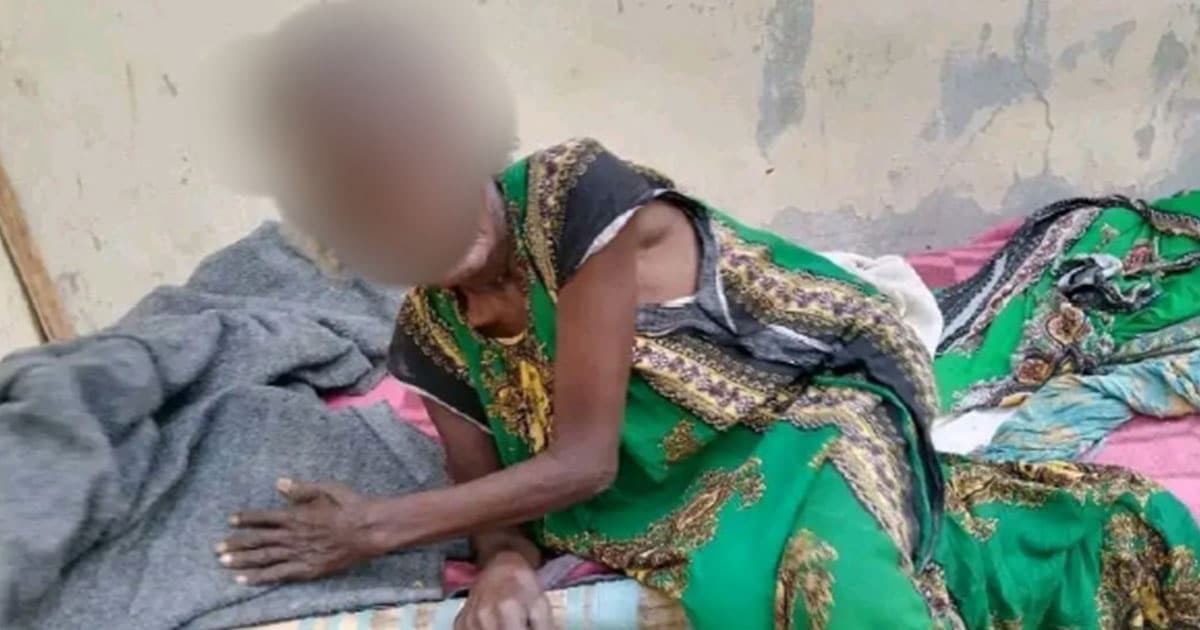
The two-year war in Tigray dismantled her life piece by piece—claiming her children, erasing her livelihood, and leaving her alone in displacement. Today, Tiblets lives with hunger and illness inside a tent known as a kenda at the Hitsats internally displaced persons (IDP) camp in Aseged Woreda, near Shire. She received the tent a week after arriving.
Five years later, it remains her only shelter.
Suspended between faint hope and quiet despair, Tiblets says she is waiting for what she calls the inevitable.
Once a mother of two sons and a daughter, she has no one left to care for her. Two of her children were killed during the war; her daughter fled to Sudan. Alone in the camp, Tiblets struggles to survive without consistent food, medicine, or support.
“I am exhausted and can barely move my legs,” she told The Reporter. “It has been days since I last received enough food or medicine for my injured legs and constant back pain. I don’t even remember when we last received wheat—or how quickly it ran out.”
In the camp, she explained, whatever little arrives is shared. One household may receive assistance one day, another none at all.
Her story reflects the grim reality for elderly people living on the margins at the Hitsats IDP center, where food shortages, inadequate shelter, and limited health services have deepened vulnerability. Older residents and people with chronic illnesses are particularly at risk, struggling to survive without regular humanitarian assistance or access to basic medical care.
Civil society organizations, including Tselal, a group based in Western Tigray, report that a significant proportion of the camp’s residents are elderly or chronically ill—people displaced from the region’s western zone.
Once home to Eritrean refugees seeking safety in Ethiopia, the camp now shelters more than 16,000 Ethiopian IDPs, most displaced during the outbreak of war in late 2020. Observers note that arrivals from Western Tigray have continued even after the signing of the peace agreement in late 2022.
The war in Ethiopia’s northern Tigray region left deep humanitarian scars, triggering one of the largest internal displacement crises in the country’s recent history. Violence, widespread destruction, food insecurity, and the collapse of basic services uprooted millions.
As of late 2025, national displacement tracking data indicate that Ethiopia still hosts approximately 2.8 million IDPs. Nearly one million of them originate from Tigray alone, according to humanitarian reports—many still living in camps and collective sites under precarious conditions.
Across the region, more than 140 officially reported IDP centers struggle to meet basic needs. Chronic food shortages, overcrowding, and limited access to health services have increased the risks of malnutrition and disease.
“The conditions at Hitsats are a grim reflection of what is happening across Tigray,” said Tsegaye Tetemke, a senior officer with Tselal. He warned that other camps in Shire, Adigrat, Adwa, and Axum face even more severe conditions.
“Families receive only small, irregular food rations,” he said. “Often these are shared among dozens of people just to prevent immediate starvation.”
While images of elderly residents at Hitsats circulating on social media have drawn public attention, Tsegaye said they reveal only a fraction of the crisis.
“Thousands here are on the brink of death,” he said. “Deaths from hunger and lack of medical care occur daily, especially among the elderly, children, and people with chronic illnesses.”
What distinguishes Hitsats, he added, is the absence of support networks.
“Nearly everyone here is elderly and alone,” he said. “In other camps, people may receive help from children or relatives. At Hitsats, no one has that luxury. All they can do is share what little they have—because everyone is struggling to survive.”
Tsegaye said that of the roughly 16,000 IDPs sheltering at the Hitsats camp, more than 300 have died since the peace accord was signed three years ago—an average of nearly four deaths a day. Over the past year alone, he said, at least 80 deaths were recorded at the center, most attributed to starvation and the absence of adequate medical treatment.
More than 3,000 residents, he added, are now facing a deepening hunger crisis, with a growing number of people in critical condition due to severe food shortages and limited access to health care. In reality, he warned, no one in the camp is safe.
“Every life here is under threat, beyond the 3,000 facing extreme hunger,” Tsegaye said.
He argued that the crisis should never have been allowed to deteriorate to such an extent, suggesting that the prolonged lack of intervention may have been deliberate—an effort, he said, to keep the scale of suffering hidden from international scrutiny.
“The gravity of this situation was well known long before the images on social media triggered public outrage,” he said. “What happened at Mekelle’s Seb’a Kare IDP center—where children were attacked twice by animals—should have been a clear wake-up call for the government and responsible authorities.”
Instead, he continued, deaths from hunger and collapsing services were repeatedly reported from multiple camps, yet little action followed. “A blind eye was turned,” he said. “I believe there has been a deliberate attempt to prevent the world from seeing the reality of Tigray’s IDP centers.”
According to Tsegaye, it was only after images of suffering elderly residents went viral that humanitarian organizations and volunteer medical teams began mobilizing toward the camp. Even then, he said, the response from both the Tigray Interim Regional Administration and the federal government has fallen far short of the scale of the emergency.
“In the past, IDPs received 16 kilos of food aid per person,” he told The Reporter. “That was reduced to nine kilos, and most recently to just three.” The complete suspension of aid in recent months, he added—particularly following the halt of support from USAID—has pushed many to the brink of death.
“Since the aid stopped, the death toll and the level of suffering have risen sharply,” he said.
The images that finally drew global attention were captured by Berhane Tekle, a local TikToker who visited the Hitsats camp with the intention of documenting conditions that he believed had been ignored for years. His video, widely shared online, sparked an outpouring of sympathy and emergency assistance.
But Berhane insists that what the world saw was not new.
“Everyone here is struggling, but the elderly are in the most critical condition,” he told The Reporter. “They cannot work, and many have no family left to support them.”
While the influx of aid triggered by the viral footage has provided temporary relief, he said, it cannot substitute for a lasting solution. “The most important thing is for people to return to their homes,” he said. “That responsibility lies with the government.”
Although the crisis at Hitsats gained international attention only recently, similar conditions have long been documented across Tigray. From Adigrat to Axum, and from Mekelle to the Adi Mohammeday camps, reports describe rising death tolls and widespread deprivation.
Media investigations and humanitarian assessments indicate that the most vulnerable—unaccompanied children, pregnant women, the elderly, and people with disabilities or chronic illnesses—are dying from starvation, acute malnutrition, and preventable diseases.
The situation at the Adi Mohammeday IDP camp is particularly alarming. The site shelters more than 27,300 displaced people and has reportedly received no humanitarian assistance for seven months. Food shortages, deteriorating health conditions, and the collapse of essential services have left thousands without basic care.
According to the camp’s coordinator, 283 people have died at Adi Mohammeday since 2023, while at least 6,630 residents are in urgent need of emergency assistance. Many—especially malnourished children, pregnant women, the elderly, and the chronically ill—lack access to life-saving medical treatment.
The viral images from Hitsats also prompted a wave of official responses. Civil society organizations, regional political parties, the Ethiopian Disaster Risk Management Commission, and the Tigray Interim Administration—including the TPLF—issued statements acknowledging the crisis. Most emphasized that the only durable solution lies in the safe return of displaced people to their homes.
While recognizing the reports of starvation and deaths at Hitsats, the Interim Administration stressed that severe hunger is not confined to one camp but is widespread across displacement sites throughout the region—underscoring a humanitarian emergency that extends far beyond a single viral video.
In contrast, the newly formed Simret party issued a sharply worded condemnation of the current leadership. In a statement, the party said the “prolonged deaths of displaced people due to the lack of food and medicine” had forced the nation to “bow its head in shame.” It accused what it described as a “backward group and its cronies” of prioritizing organizational security over public safety, while enriching themselves through what it alleged was the large-scale theft of land and gold.
Simret further alleged that the administration and its affiliates had deliberately obscured the suffering of displaced people from media coverage, calling it a calculated attempt to shield the scale of the crisis from the international community.
The Global Society of Tigray Scholars and Professionals (GSTS) also weighed in, calling for the immediate deployment of life-saving assistance—including food, medical care, and emergency relief—to Hitsats and other affected camps. The opposition Salsay Weyane Tigray party similarly warned that this was not an isolated case, citing multiple assessments that documented severe conditions across displacement sites throughout the region.
In its statement, the party argued that human rights groups and international organizations have both a moral and legal obligation to exert meaningful pressure on the government to reverse policies that disadvantage internally displaced people and refugees.
The Ethiopian Disaster Risk Management Commission, however, challenged the viral accounts. In a statement issued on December 23, the Commission said that information circulating on social media about the Hitsats camp was inaccurate. It maintained that displaced residents had received consistent humanitarian support throughout the year, with food assistance delivered from September to December 2018 under the Ethiopian calendar.
The Commission also reminded regional and local authorities that ensuring aid is used strictly for its intended purpose falls under their responsibility.
Efforts by The Reporter to obtain a response from the Tigray Regional State’s Disaster Risk Management Commission were unsuccessful.
However, in a statement issued on December 26, 2025, the Regional Disaster Risk Management Commission said it had formally communicated with the Federal Disaster Risk Management Commission regarding the serious conditions facing the IDPs in the region.
“We have consistently raised these concerns during the Disaster Risk Management Council’s regular meetings, which are chaired by the Deputy Prime Minister and attended by all regional presidents and the Disaster Risk Management Commissioner,” reads the statement. It added that federal support and monitoring teams have been visiting the region to observe and assess the situation directly.
The statement further noted that the 2024 Multi-Sectoral Meher Seasonal Assessment, jointly conducted by regional and federal government institutions, universities, and humanitarian agencies, confirmed that 2.459 million people in the region require assistance.
Yet, a humanitarian advocate based at an IDP camp in Shire, speaking on condition of anonymity, described the situation as “deeply saddening” and accused political actors of exploiting the suffering of displaced people for leverage.
“The most tragic aspect of the statements issued by political parties, the TPLF, the Commission, and the Interim Administration is that they appear driven more by political interest than by genuine concern,” the advocate said. “It is unbearable to witness such extreme starvation and man-made suffering in the 21st century.”
The struggle for survival unfolding in Hitsats and across Tigray, observers say, is not an isolated tragedy but part of a broader national humanitarian emergency approaching a breaking point.
In neighboring Amhara, conditions are similarly dire, with more than half a million displaced people in urgent need of shelter and essential non-food items.
Recent reports indicate that at least 560,000 people living in 33 IDP sites and collective centers across Amhara—including in the North and South Wollo zones—are enduring what aid agencies describe as “severe” living conditions. Many shelters have become uninhabitable, damaged by years of overcrowding, structural decay, and prolonged use.
A December 2025 UNHCR report details a severe and rapidly escalating humanitarian crisis among IDPs in the region, marked by widespread starvation and preventable deaths among multiple displacement sites. The recent UNOCHA reported that approximately 90 percent of the displaced population resides within host communities.
It added that the remainder are in informal sites, primarily the Debre Berhan and Jara camps, which host roughly 22,000 and 10,000 individuals respectively.
The UN, citing the Amhara Disaster Prevention and Food Security Commission, states the displacement stems from multi-layered conflicts, including spillover violence from the western Oromia region. Many now, according to the report, reside in collective shelters in Debre Berhan (China camp), Woinshet, and Bakelo, where there are critical shortages of basic necessities.
An effort to return 2,800 displaced people from Amhara to their places of origin in West Shewa, East Wollega, and West Wollega was unsuccessful, as many were unable to go back to their homes while others returned to the displacement camps in Debre Berhan.
From the silent corners of Hitsats to the crumbling centers of Wollo and Debre Berhan, the ‘inevitable’ fate Tiblets fears is becoming a collective reality for millions of Ethiopians caught in a cycle of displacement that transcends regions.