





The National Agricultural Biotechnology Research Center (NABRC) was established under the Ethiopian Institute for Agricultural Research (EIAR) in 2015 as part of Ethiopia’s efforts to modernize its farms and boost productivity. The Center’s launch also coincided with the Ethiopian government’s decision to relax policies on genetically modified organisms (GMOs) for the first time.
Researchers at the NABRC laboratory complex sprawled on a vast tract of land in Holeta, 40 kilometers west of Addis Ababa, have since been busy with work on agricultural innovations like heat- and disease-resistant crop varieties, efficient cattle feed, and microbial research.
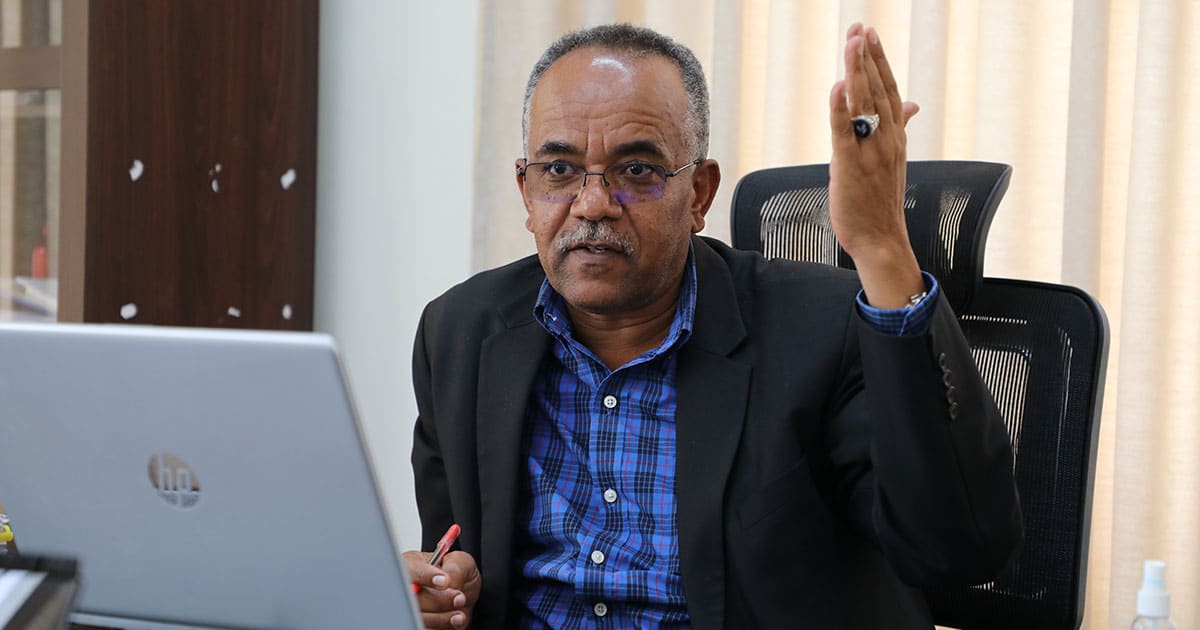
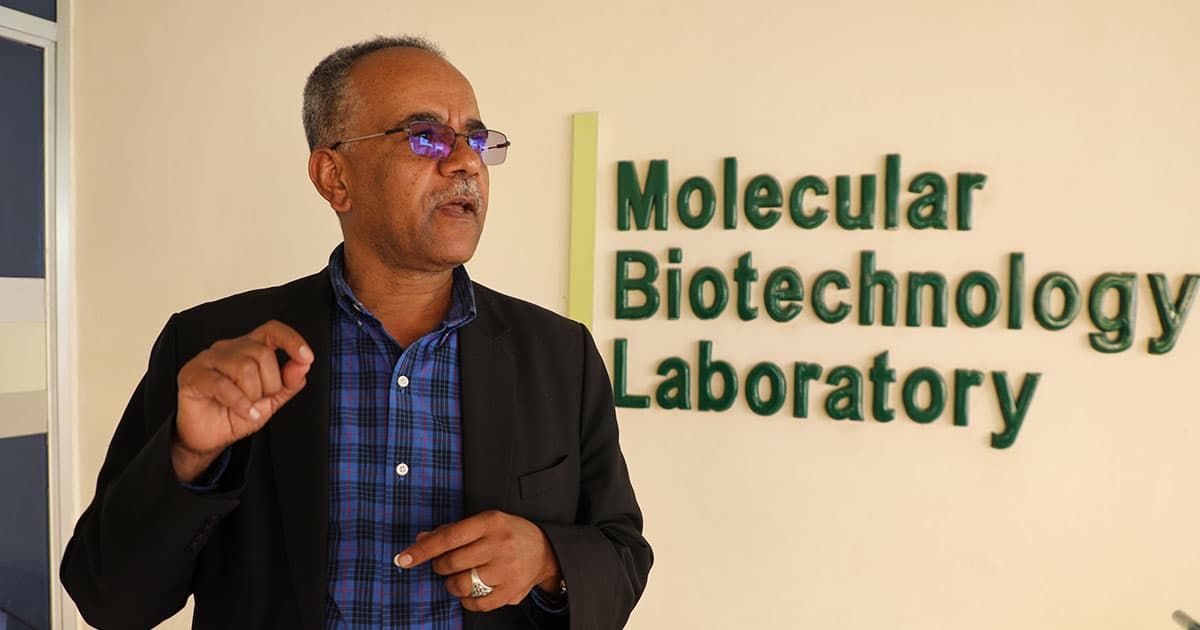
A decade down the road, Leta Tulu (PhD), NABRC director, says the Center’s contributions to Ethiopian agriculture have been immense. He sat down with The Reporter’s Ashenafi Endale to describe the work being done at NABRC and discuss researchers’ ambitions for the future. EXCERPTS:
What does Ethiopia envision achieving in terms of agricultural biotechnology? Can Ethiopian agriculture, which remains largely traditional, keep pace with global progress in biotech, or even leapfrog advances?
Contextualizing the Ethiopian scenario versus the global high-end biotechnology trend is critical. With nearly 130 million people, Ethiopia is the second largest population in Africa, next to Nigeria. The projection is we will have between 170 million and 200 million people by 2050.
The FAO [Food and Agriculture Organization] projected that in order to feed this fast-growing population, we must increase food production by 70 percent. Because of climate change, which is inducing additional biotic and abiotic challenges, additional solutions are required. Plus, because traditional agriculture methods in Ethiopia are hindering productivity increment efforts, it has become difficult to achieve the projected production increment with the business-as-usual approach.
The conventional agricultural research we have been doing has contributed to agricultural growth in Ethiopia. But it is not sufficient compared to the skyrocketing population and demand. We cannot continue depending on conventional research to develop. To cope with the problems stemming from population growth and climate change, additional technologies are necessary..
Globally, biotechnology is a proven tool to address challenges of climate change and population pressure. It is the decision of the Ethiopian government that we have to complement conventional research with modern biotechnology tools.
Ethiopia envisions the exploitation of the potential of modern biotechnology in agriculture research to generate information, data, and technology that enables the achievement of food security, export promotion, industrialization, employment generation, and natural resources conservation.
Other than agriculture, biotech’s contribution to drugs and vaccines is also substantial, and its commercialization is helping resolve many diseases. Industrial biotech—like enzymes, essential amino acids, and catalysts—has also become a big industry today.
Biotechnology efforts in Ethiopia are already paying off. Our labs are working on several enzymes and catalysts that are essential in manufacturing and agro-processing, among others. We are at the stage of commercializing the enzymes and catalysts we have identified and developed through years of research.
Ethiopia can definitely leapfrog in biotechnology. Even in the 10 years since NABRC was established, we have seen immense contributions and identified immense potentials.
How does NABRC prioritize its mandates in achieving those national targets?
Mandates are not conditional. They are foundational commands that must be accomplished. The first mandate is becoming a center of excellence for agricultural biotechnology. Second is research and generating innovative and competent technologies in botanical, animal, and microbial [fields]. We are accomplishing our mandates.
NABRC is mandated to research and generate data and improve agricultural biotechnological solutions to enable Ethiopia to achieve food security. Our work includes generating knowledge that enhances conventional breeding, research on biotechnology, genetic engineering, livestock breeding, and microbial biotechnology, among others.
NABRC has three major national research programs: plant biotechnology, livestock biotechnology and microbial biotechnology. Each of these thematic areas have their own directions.
So, the critical role of NABRC is formulating and introducing protocols for such procedures. We have developed protocols for countless plants. All other research centers in the country take these protocols from us and distribute them to farmers. We work intensively on tissue culture and molecular research works.
In general, we embarked on biotechnology works to introduce new and important varieties like hybrids, and to provide solutions for problems that cannot be resolved through conventional research and breeding systems. We produce new varieties after studying DNA at the molecular level, and then we give the new variety or breed to the multipliers or breeders.
We introduce heat-tolerant, disease/pest-resistant, and highly productive varieties. Genetic engineering has revolutionized agriculture globally, unlike any other factor in agricultural history. Currently, over 200 million hectare farmed land globally is covered with GMOs.
Our mandate is to evaluate the leading agricultural technologies in the world, domesticate and introduce them to farms. We have introduced GMO maize and cotton. We also developed a new, disease-tolerant variety of Enset [false banana].
How do you asses the capacity of NABRC?
We are running a lot of research programs on microbial, animal feed, agro-industry, and environmental protection. We have already introduced a lactic acid bacteria that helps dairy processing industries. Ethiopia spends over USD 40 million annually to import chemicals for dairy processing industries. Our finding substitutes the import. We identified that bacteria, developed the technology, and are currently commercializing it in collaboration with dairy industries.
NABRC has substantially developed its capacity. This is the first well equipped, advanced, well-organized facility and center of excellence in Africa. Researchers across Africa, including AUDA-NEPAD, send their researchers here. We have over 50 researchers, all with graduate degrees or above.
When COVID-19 broke out, Ethiopia used to send samples for testing in South Africa. Then the WHO and Ministry of Health approved the EPHI [Ethiopian Public Health Institute] and our Center to test for COVID-19. Our lab contributed a lot to the pandemic response.
NABRC also contributes highly to the Ethiopian export sector. Agricultural commodity exporters test their samples at our labs. Buyers across the world, especially in Europe, have stringent requirements regarding agricultural imports. They do not import if a single trace of unwanted chemicals, microbial, pests, diseases, weeds, or anything is identified in the export commodity. So we check for all that at our lab before the commodity is shipped. Shipping only takes place after we confirm to the Ministry of Agriculture that the commodity is free from these contaminants.
NABRC is a center of excellence. Regarding anything related to biotechnology, genes, and productivity of plants, livestock and microbial; the center generates and disseminates knowledge, data, and solutions. We provide critical support and capacity building support to regional agriculture bureaus, other research centers across the country, and universities.
Ethiopian and foreign researchers do their graduate and postgraduate work at our labs, because this is the only facility [that can accommodate them]. Regulators and experts at the Ethiopian Environmental Protection Authority and other institutions receive training at our Center.
Creating a national biotechnology capacity across the board is our mandate, and we have succeeded. Currently, 13 universities are graduating biotech experts at the graduate and postgraduate levels. We have several technology breakthroughs in the pipeline for commercialization. Biotech is key to transforming Ethiopia’s economy.
Do biotech interventions prioritize commodities meant for household consumption, or industrial inputs and export crops?
All are priorities. For instance, we introduced Bt cotton because the existing local cotton variety is poor in productivity and could not satisfy demand. We addressed both the industrial input demand and also exports by introducing cotton biotechnology.
For food security, we are working on several commodities including wheat, maize, teff, rice, and barley, among others. We work intensively on coffee hybrids, which is for export. At Wondogenet, the Aromatic and Medicinal Plants Center is also working on medicinal plants. We work on vaccines, tissue culture protocols, etc. So our research programs are aligned with all sectors, and national needs.
We also formulated the national research strategy. We build national biotech capacity. We support regional states to build their own biotech labs.
NABRC is not mandated to introduce a biotechnology policy. Crafting a policy is not a mandate of our center. In a report, the Office of the Federal Auditor General [OFAG] stated that NABRC introduced a strategy before introducing a policy first. That is a mistake. OFAG does not know the biotechnology sector and most of what it reported as findings is wrong. The mandate to introduce a biotechnology policy is given to the Ethiopian Bio and Emerging Technologies Institute, not to NABRC. We have introduced the biotechnology strategy based on Ethiopia’s existing agricultural policies, roadmaps, and the UN’s Sustainable Development Goals [SDGs]. Whatever we do, should align with the 17 goals of SDG. EIAR has a stringent internal control mechanism that aligns research with SDGs.
Each and every research program and project under our center and EIAR passes through a stringent process before approval. There are layers where each research proposal is scrutinized by other researchers, internal and external, and at EIAR director levels. Each project is launched after the technical as well as economic contribution is evaluated exhaustively at each step. Once it is approved at EIAR level, then the institute applies for a budget from the Ministry of Finance. Hence, OFAG’s claims that research works are not prioritized is baseless. We don’t just waste taxpayers money and our system does not allow that.
Could you give us examples of successful work at the Center?
We have state-of-the-art labs each for plant, livestock, and microbial research. Our tissue culture lab is especially advanced. We extract DNA from plants, identify their genotypes, then DNA analysis is done from different perspectives. Gene documentation is also done.
Before our DNA lab was built, Ethiopia was forced to send samples abroad for testing. That used to cost the country a lot in foreign currency, and the test results were almost never on time. But now, we can provide DNA testing for exports, for example, within two days. This is a huge capacity for Ethiopia. The facility also has a huge library. Some of these facilities were built with the World Bank’s support.
In Ethiopia, the germplasm of many indigenous varieties are stored at gene banks. But unless the genotypes are mapped and analyzed; we cannot utilize them. To know which gene of which variety is required for what purpose, all the genetic analysis and mapping of existing domestic varieties in Ethiopia must be done. We are doing that.
At our tissue culture lab facility, genes of plants selected at the DNA labs are turned into plant shoots in a highly controlled environment. Air components, temperature, light, power, nutrition, and everything in the tissue culture facility is controlled and monitored. Several sophisticated machines are deployed to regulate each of these factors, until the tissue shoot is multiplied and distributed to farmers as first generation seeds.
Since it takes years to produce a single improved variety of a crop, then we use the leaves of the first generation of that improved variety to duplicate it. Once we produce the F1, then we introduce the protocol. Tissue culture helps to expel certain disease causing genes, and breed disease-free, highly productive varieties. Our job is introducing the new selected variety, delivering them to seed multiplying stakeholders, and providing the initial materials. If the new varieties we release are multiplied in millions, and delivered to farmers, Ethiopia’s agriculture could reach a new height in the history of agricultural revolutions.
We have introduced hybrid improved varieties for many specialty coffee varieties in Ethiopia, be it Harar, Sidama, Wolega, Jimma, or Illubabor. We’ve also introduced disease-free and productive banana varieties.
Coffee is typically cultivated only in the southern and western parts of Ethiopia. Now, it is being adopted in the highlands in central and other parts of Ethiopia following the introduction of improved new varieties by our Center. In the near future, coffee will be grown in all parts of the country.
Unlike maize, coffee varieties cannot be generated easily. A number of limiting factors exist, hampering multiplication of a selective produced variety. In several parts of Shewa, including Ejere, Woliso, Metarobi, Girar Jarso, and in the surroundings Addis Ababa; we are supplying improved coffee varieties. Coffee is trending in the highland areas of Ethiopia now. We have promoted the improved varieties and demand is huge now.
Multiplying the new improved varieties and technologies introduced by NABRC requires private investment. NABRC’s role is researching and releasing new varieties, but not multiplying the improved varieties and supplying to farmers. This role is for private investors, state enterprises, and seed sector actors.
Regarding microbial research programs, we have also done a tremendous job. Under this program, we are running five thematic areas; food, agro-industry, livestock feed, bio-organic fertilizer, and environmental microbial technology.
In food microbial, we identified and introduced probiotic lactic acid bacteria technology. In highland parts of Ethiopia, fermenting milk into yogurt takes up to four days. Our technology reduced the time to six hours. It is in the commercialization process currently, in cooperation with large dairy industries in the country. We have also identified and introduced a microbe that turns fruit and food wastes into biofuel, bio-fertilizer and other products.
We developed technology that enables us to produce animal feed rich with protein, from single-celled microbes. The feed includes essential amino acids that are critical for poultry and fishery farms. We are supplying it.
We also produced new feed for cattle. Usually, when cattle consume legumes and grasses, it takes longer for the animals to digest it. This means it can take a long time to produce milk, and it can also have an effect on the health of the cattle.
We are field-testing organic fertilizers that work with nitrogen fixing, and can increase soil fertility. We are introducing new technology to the textile and leather industries. So far, they have been using chemicals and heavy metals for bleaching of textile and tanning. But these chemicals have been destroying the environment in Ethiopia. They use chemicals like chromium and lead. These are very toxic. We’ve extracted an enzyme from a microbe to replace these chemicals. It is environmentally safe and affordable.
Currently, the global enzyme industry is growing fast, with huge demand and transaction. In the future, our Center will also capitalize on this, so that Ethiopia can rely on this sector economically.
Multiplying single celled microbes in the lab and producing them en masse for high-protein animal feed is also a great breakthrough. It will completely change the current lack of feed in poultry, fishery and other livestock, which soared prices currently. We also developed a microbe that can shorten the time needed to bake injera from three days to 24 hours, as well as one that can shorten the time it takes to prepare food from enset from three months to one month.
We also developed technology that eliminates cyanide concentration from cassava. Cassava has cyanide concentration naturally, but a lactic acid bacteria we identified can reduce the content so that cassava can be consumed safely.
We are also working on mushrooms, including finalizations of optimization of substrates. We are training youth and supplying them with new products.
Regarding animal biotechnology, we are working on four thematic areas: animal reproduction, health, and breeding. Livestock health biotechnology uses molecular agents to diagnose disease in hours, once the DNA is extracted. Without the PCR at this lab, which enables diagnosis within hours, the livestock might die.
We produce productive livestock breeds, but the feed supply in the country is not good. We recently introduced technology that enables the determination of embryo sex. Dairy farms need female cows, while meat ranches need bulls. So determining the embryo sex on time helps them.
Why does substituting the import of sexed semen remain difficult?
Sexed semen and embryos are currently being imported to Ethiopia from abroad through the facilitation of the Ministry of Agriculture [MoA]. We could simply substitute for it here if additional facilities were fulfilled. To prepare sexed semen, first identifying the X and Y chromosomes of the livestock is critical. But in Ethiopia, there is no machine that helps to identify the X and Y chromosomes. For instance, in Kaliti, they collect conventional semen, but they cannot determine the sex of the chromosome. Therefore, it is difficult to use for a predetermined sex type of animal. This means it is a probability that one gets a female or male calf. This does not help dairy or meat investors who want only certain sex types for better productivity.
So, the machine that sorts out the X and Y chromosomes is essential. As a country, Ethiopia does not have a single sorting machine.
What we have developed now enables us at least to determine the sex of the animal at the embryo stage. So, though we don’t have the sorting machine to determine the sex at the DNA level, at least we managed to determine it at the embryo level. We developed this technology recently, and it also substitutes for imports.
Importing sexed semen from abroad is expensive. But the technology is highly successful. The dairy village established in Bishoftu is highly successful. Over 98 percent of the calves born are heifers, which is good for dairy production. Now the MoA is expanding it to 21,000 dairy villages.
Tell us about the impacts of the interventions taken by your Center in terms of achieving agricultural modernization, productivity, and structural transformation in the economy towards the industrialization aspirations in Ethiopia’s development endeavors.
The major impact of biotech is modernizing Ethiopia’s agriculture. The Bt cotton eliminated the bollworm and reduced herbicide impacts. Many technologies we introduced have saved farmers from traditional back-breaking work like weeding and pesticide spraying. Productivity has significantly improved. Women are relieved of back-breaking agricultural work. Children have time to go to school. Agricultural modernization is simplifying agricultural work so that people have time for other priorities and a quality life.
The Federal Auditor General recently disclosed a report in which it criticized the Center for failures in carrying out its duties. What is your response?
OFAG failed to understand and define NABRC’s success. Having such a state-of-the-art biotech lab and releasing several breakthrough technologies within ten years is a major accomplishment. Succeeding in a single biotechnology program takes several years, but NABRC achieved so many within the first decade of its establishment.
With the nascent biotechnology trend in Africa and in Ethiopia, NABRC has done extraordinary work. Over 50 researchers and biotech scientists have spent day and night in our labs for the past several years. But OFAG says NABRC failed to do anything.
When the officials and experts of OFAG first came, we had meetings with the management of NABRC. They told us their objective and said the audit would take around ten months. They told us at the end there would be an exit conference to reach a consensus on the audit findings. Both OFAG and NARC should have approved the findings before finalizing the report. An exit conference is a legal procedure for OFAG. For several months, we provided all the documents and reports and everything for OFAG. But finally, they left without doing the exit conference. OFAG also did not do the exit conference with EIAR.
OFAG gave us a draft report initially. We found a lot of mistakes. We provided tons of documents and evidence for them to correct their draft report. But they refused to consider any of our evidence. They also refused to do an exit conference. Hence, they proceeded to publish the draft report as a final report without our agreement and approval.
OFAG is a public institution created to check if public institutions are doing the right job. But their report regarding NARC is completely baseless and far from the truth on the ground.
Policy cannot be developed at the Center level but at the government level. We told OFAG that it was not our fault, but they failed to listen. Our reference is the existing rural agricultural development strategy to develop our research strategy. In terms of biotech performance, we are ahead on all our targets.
The Bio and Emerging Technologies Institute has drafted a biotechnology policy for Ethiopia. The draft policy is being scrutinized and reviewed at different stages. Our researchers also participated in the forums to contribute from the aspect of Agri-biotech. That draft is tabled to the Council of Ministers and is awaiting approval.
So, OFAG’s allegation that we did not produce a biotechnology policy is not related to our mandate.
The NABRC strategy is designed for 15 years, up to 2030. There are 100 strategic targets set in Agri-biotech in the strategy. Now we are in 2025, and we have achieved 71 strategic interventions. We are left with 29 strategic interventions and 5 years to accomplish them. But OFAG stated the strategic interventions failed totally and inefficiency has been ongoing for years. That is completely incorrect.
So it was all a misunderstanding?
OFAG did not understand the documents we provided to them. In one specific year, we were handling 62 research projects, but OFAG reported only two. OFAG lacks the willingness to understand what we do. They went on to publish a very substandard audit report on NABRC.
OFAG also stated NABRC mismanaged resources. That is unfounded. Each of the resources we utilize for all these research projects is mobilized based on our strong work and well-understood partnerships. EIAR and all the research wings under it, including NABRC, are among the most efficient public institutions in Ethiopia, and nobody can accuse us of anything. The nature of research disciplines and our sector does not allow us a single mistake. Our Center is the last public institution to be accused of inefficiency and failure, let alone the allegations made by OFAG.
As per the procedure, OFAG should have discussed it with us, with EIAR management, and then presented its findings to Parliament. But OFAG did not do any of this. Yet, it published its unfounded report.
We are not saying there are no challenges in our work. For instance, we need sensitive reagents for lab work. But we don’t access such chemicals in the local markets. We import directly from manufacturers abroad, so we need forex. Such chemicals should be kept at minus 20 degrees Celsius. When the chemicals arrive at Bole Airport, the temperature rises as we await for Customs clearance. So we are requesting that refrigerating facilities be installed at Bole Airport. But OFAG reported we have a procurement crisis instead of recommending the requests we made to the Customs Commission. We never do a single procurement outside of the government’s procurement guidelines.
OFAG also reported that research students going abroad on scholarships are not coming back. This is also wrong. Every scholarship student is sent after committing collateral to come back and serve the country. Whenever a student remains abroad, the monetary guarantee is submitted to the government. If they fail to come back, they pay a fine to the government, including all expenses for their study. All that is collected if a student fails to come back. We cannot go and bring that student from abroad using force. They pay back all the money to the government treasury, every penny spent for their training. There are even students who have been brought before court to return the money. Some are in the court process currently.
OFAG also accused us of moving funds from project to project and wasting money on research not benefiting society. This is also a very amazing allegation. We would be happy if they could present one piece of evidence. Each project we are running is crucial for our society, the economy, and the national economy. No money is moved from project to project. As per government regulation, public institutions can reallocate funds from one budget code to another based on the priority at hand. In general, the OFAG report is not final until we endorse it.
Given that agricultural biotech is a new frontier for developing economies like Ethiopia, what can you tell us about the challenges your Center is facing, and how you are trying to resolve them?
Biotech is new for Africa and Ethiopia. There are also wrong perceptions regarding biotechnology, including a fear of the unknown. Not only do some segments of society doubt GMO technology, but so do some scientists. In developed countries, over 90 percent of farmland is covered with GMOs. But there are doubtful scientists even in those countries. Awareness creation is important. But in the past several years, the mindset towards biotech has substantially improved.
Research takes time. Nothing can be done overnight. Researching and developing these technologies took us years. Now we are on the verge of commercializing and translating them into economic benefits. They will revolutionize agricultural productivity, industrialization, and the modernization of Ethiopian agricultural practices as well as industries. Now is the time to see the fruits of our years of research.
We are also expanding the lab capacities of our programs under NABRC. We are building additional facilities for microbial, tissue culture, and animal biotechnology and for infection-resistant traits.
Finding a lead researcher is difficult. A lead researcher is a professor who is well-published, seasoned in breakthrough research work, and has contributed to the community and the country. Finding such manpower on the market is difficult. Therefore, we produce them ourselves.
Success in introducing a single improved variety takes several years. OFAG thinks it is something that can be done every year. This is very wrong.
The Center needs electric power 24/7. Especially the tissue culture facility, which needs regulated light for 16 hours and dark for 8 hours every day. If the power goes out for a second, all the genes and samples in machines and specific refrigerators, stored for years, will be lost. Hence, the Center has deployed three generators in case of a power outage. But OFAG reported the Center has no generator.
While commercializing the technologies it introduces, does NABRC enter into benefit-sharing agreements with the private industries?
NABRC releases the technological finding, produces a prototype, and gives it to private developers for large-scale production. For tissue culture, we also give the protocol to private multipliers or labs or developers. For instance, we released a wilt-disease-free ginger variety. Then the Mekelle biotech center multiplied the new variety in large amounts. We also developed a protocol for sugarcane, which the Mekelle biotech center multiplied and gave to all sugar industries across Ethiopia.
Private companies and industries are benefiting a lot from our technologies. In return, NABRC gets no benefit for the research it conducts. NABRC is a non-profit research institute; hence our mandate is just releasing problem-solving technologies.
But currently, a guideline is being developed to guide how such research centers can share benefits with private developers of their prototypes.
What can you tell us about reports of GMO wheat in the lowlands?
There is no GMO wheat in Ethiopia. It is a variety developed by EIAR using conventional breeding.
Bt cotton technology was introduced to farmers in 2019, but productivity has yet to improve. Farmers also report being unable to access Bt cotton seeds. Can you tell us more about this?
There is an independent task force working on cotton under MoA and the Ministry of Industry. We researched, tested and introduced Bt cotton technology. The follow-up work in implementation is mandated to the task force and the seed sector.
How do you evaluate the capacity of firms in the seed sector?
There are private, multinational, and also government enterprises involved in multiplying and supplying certified seeds for farmers.
For instance, Corteva has huge capacity in hybrid seed production in Ethiopia. It is the leading company in taking improved maize seed from research centers, multiplying and supplying it to the farming community. The Ethiopian, Oromia, Amhara and Debub seed enterprises are also major players. These are companies feeding Ethiopian agriculture.
Pioneer, which is currently called Corteva, has reportedly monopolized the supply of hybrid maize for almost all farmers in Ethiopia. A recent management crisis at the multinational prompted reports of supply disruptions in Ethiopia. Farmers also have complaints about the productivity of its improved seeds. Can you tell us more?
I do not think there is a monopoly. The demand for improved maize seed skyrocketed in Ethiopia. Currently, we are satisfying half of the demand. Regarding Corteva, you can ask the company.
Do farmers pay more for improved seeds?
Our improved seed technologies are provided for farmers royalty free. Farmers should not pay for the technology. Companies have the right to receive improved seed technologies from research centers, multiply the seed, and sell it to farmers with their own brand. The company does not incur additional cost regarding the technology. It should not charge farmers for the seed technology.