





Experts Call for Sustainable Nutrition Leadership in Ethiopia
Afework Mulugeta (Prof.), drawing on decades of research into the consequences of hunger, cautioned that recent indications of worsening nutritional conditions point to a troubling setback after years of hard-won progress.
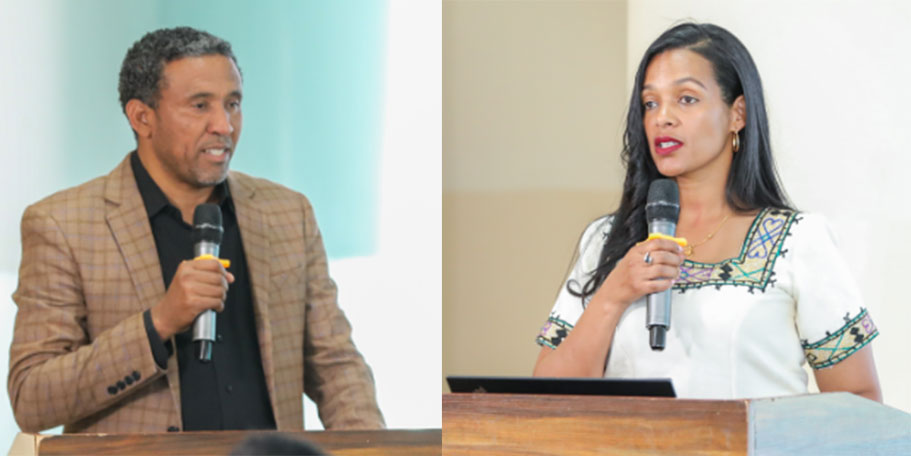
To Afework, a researcher at Mekele University and vice president of the Ethiopia Nutrition Leaders Network (ENLN), the country’s nutrition crisis is not merely a statistical concern. It is a lived experience that stretches across millions of households. “These numbers reflect the daily reality of children and breastfeeding mothers,” he said, pointing to the rising indicators of stunting, wasting, and maternal mortality. “If we fail to address these gaps now, the consequences will continue across generations.”
His message—candid, urgent, and grounded in evidence—framed the discussions at ENLN’s seventh Annual Forum this week at the Inter Luxury Hotel. Government officials, civil society organizations, legal experts, and development partners gathered under the theme “The Role of Nutrition Leadership in Changing Funding Environment,” to assess the shifting landscape of Ethiopia’s nutrition sector at a moment of tightening global funding and escalating domestic need. Their task: to craft a stronger, more resilient food and nutrition system capable of withstanding financial shocks while advancing long-term national goals.
The government’s Nutrition for Growth (N4G) initiative has pledged to mobilize USD 638 million—roughly a quarter of Ethiopia’s national requirement by 2030—to expand community-based nutrition programs, advance gender equity, and strengthen monitoring systems.
Yet the sector remains under pressure.
Research shows nutrition funding has declined by about seven percent in recent years, reflecting global trends that have intensified in the current year. As treatment costs rise and domestic financing lags behind, the funding gap continues to widen.
Still, civil society groups have pushed forward. Organizations have secured domestic and international resources to support development projects, emergency responses, and capacity-building efforts. Their message at this year’s forum was clear: resource mobilization is most effective when paired with coordinated, capable leadership across federal, regional, and community levels.
Among those emphasizing the importance of such leadership was the Ethiopian Civil Society Coalition for Scaling-Up Nutrition (ECSC-SUN), a core group member of the forum. The coalition played both a technical and financial role at the gathering, underscoring its commitment to improving governance, coordination, and accountability within the sector.
A major focus of the workshop was Ethiopia’s Seqota Declaration Model Woredas—districts piloting the government’s plan to end child malnutrition by 2030 through a multi-sectoral, community-centered approach. Participants examined how lessons from these model districts can guide the expansion of national nutrition policies to the Woreda level. As the Seqota Declaration moves from its Innovation Phase to an Expansion Phase, it now reaches 520 woredas nationwide.
Complementary efforts—including the Ethiopian Food System Transformation Roadmap, Food-Based Dietary Guidelines, and school feeding programs linked to Early Childhood Development and the Yelemat Tirufat initiative—were highlighted as pillars of a broader national reform agenda.
Delivering the keynote address, Abebe Bimerew, National Lead for ECSC-SUN, described nutrition leadership as both a moral obligation and a strategic economic imperative. He argued that strong leadership is essential for implementing the Food and Nutrition Policy, strengthening community-based platforms, advancing fiscal policy advocacy, and generating evidence that informs decision-making.
“Civil societies play s key role in connecting communities, systems, and national priorities,” Abebe said, noting that ECSC-SUN has supported the Food and Nutrition Strategy through technical inputs, financial contributions, and multi-sectoral coordination. He pointed to the organization’s seven active regional platforms and its national expansion plan to support the Food and Nutrition Strategy implementation.
Abebe added that ECSC-SUN’s pilot initiatives in three regions focus on women’s economic empowerment, adolescent-centered interventions, and gender-equitable household practices—areas that directly influence family decision-making and nutrition outcomes. Scaling community programs, strengthening monitoring systems, promoting gender equity, and engaging the private sector, he said, are essential to closing Ethiopia’s widening nutrition financing gap.
“The funding landscape may be shifting, but with strong and visionary leadership, this challenge can be transformed into an opportunity,” he said.
As Ethiopia works to operationalize its Food and Nutrition Policy, the government and development partners are focusing on building institutional capacity. Achievements include leadership training programs, the rollout of the Mandatory Food Fortification initiative, and the expansion of school feeding and Early Childhood Development activities across the country.
These steps, said Hiwot Darsene, Lead Executive Officer for the Ministry of Health’s Nutrition Coordination Office, reflect a collective commitment to translating policy into action. She emphasized that nutrition leaders at federal, regional, and institutional levels have played a central role in carrying the policy forward.
Hiwot warned, however, that as global funding patterns shift, the need for adaptive, forward-looking leadership becomes even more critical. “It is important to navigate uncertainties with minimal risk and establish plans that turn challenges into opportunities by prioritizing resilience and stability,” she said. “This requires innovative and even unconventional thinking—going beyond the usual ways of doing business.”
Despite years of reform, the country’s nutrition indicators remain deeply concerning. The Ethiopian Public Health Institute’s baseline survey for the 2023 Food and Nutrition Strategy shows that 39 percent of children under five are stunted, 22 percent are underweight, and 11 percent are wasted—figures echoed by a 2025 UNICEF and WFP progress report. An estimated five to six million children remain chronically undernourished.
For Afework, the challenge is not only financial; it is also structural. Awareness gaps, weak integration of nutrition into the education sector, and inconsistent policy implementation continue to slow progress.
He argues that schools, in particular, represent an underutilized entry point. “Schools must be allowed to incorporate nutritional concepts into their curriculum as part of a dedicated subject,” he told The Reporter. The school feeding program and Early Childhood Development initiatives, he said, demonstrate the value of linking nutrition with learning.
Yet nutrition continues to depend heavily on donor support. “We expect the government to prioritize the sector in the same way as the Seqota Declaration,” he said. “Without stronger domestic commitment, nutrition-related problems will continue to affect our communities.”
Afework emphasized that effective policy implementation and the adoption of widely recognized high-impact interventions remain central to strengthening Ethiopia’s nutrition system. In his view, confronting malnutrition requires not only resources but sustained political will, institutional alignment, and public awareness.
For the leaders gathered in Addis Ababa, the message was unmistakable: Ethiopia’s nutrition challenge is both urgent and solvable. What happens next will depend on the strength of the systems they build—and the leadership they bring to the task.