





Female Engineers Drive Energy Access
Over the past two decades, Netsanet Behailu has carved out a career in Ethiopia’s energy and technology sector, rising from electrical engineer to her current post as a project manager with General Electric (GE) Ethiopia.
After earning her first degree in electrical engineering from Adama University, she completed a master’s at Addis Ababa University and later received a PhD in development engineering from a U.S. institution. Today, she works at a key switching station inside one of the capital’s major substations, overseeing the flow of electricity from central transmission lines to Addis Ababa’s sprawling neighborhoods. Her job involves stabilizing distribution, reducing power fluctuations, and ensuring a swift return to service when outages occur.
Her resume reflects a breadth of experience, including rural electrification projects that have expanded power access to underserved communities. In 2017, the Ministry of Water and Energy honored her for helping deliver an off-grid solar system that powered rural households for almost a decade. That work, she says, helped pave the way for a new milestone: being named one of the honorees at this year’s Ethiopian Women in Energy awards.
“My effort and hard work allowed me to reach this level,” she told The Reporter. “Such recognition encourages not only me but also paves the way for other young women to follow in the footsteps of myself and others, motivating them to contribute more to the energy sector.”
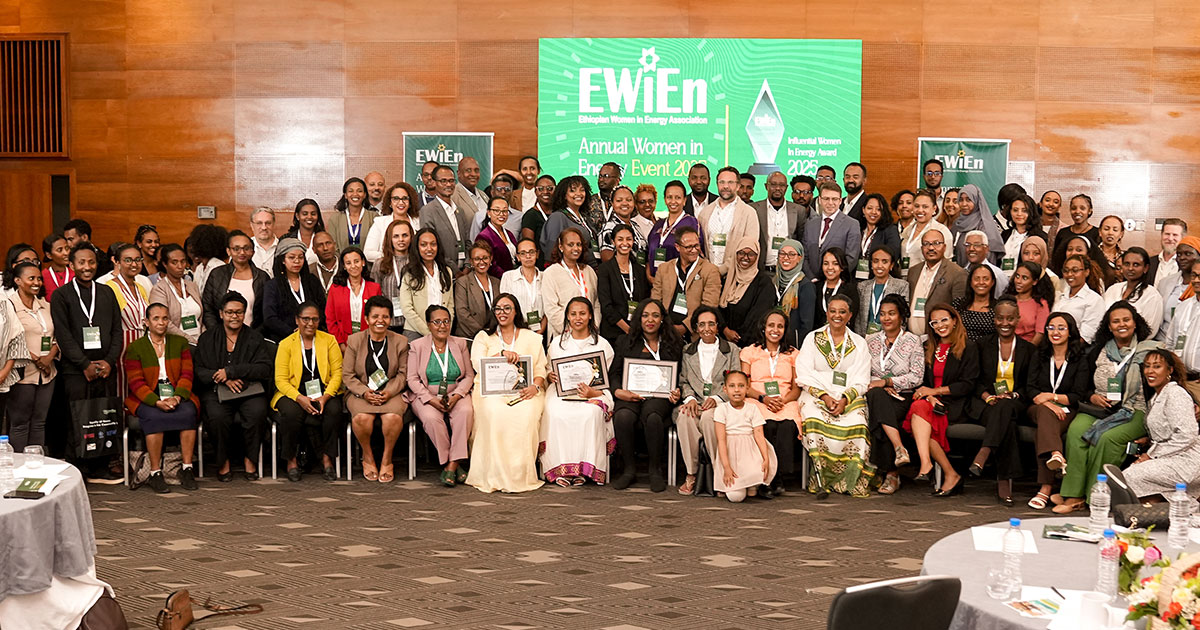
Netsanet was celebrated at the fifth annual Women in Energy Awards, organized by the Ethiopian Women in Energy Association (EWiEn) on November 27, 2025. The ceremony recognized nominees for the annual Influential Women in Energy Award and honored professionals who have made notable contributions to the sector.
Held under the theme “Despite the Challenges, We Continue to Grow,” the event highlighted the resilience and innovation of women advancing Ethiopia’s energy transition. It also underlined the sector’s central role in the country’s development and sustainability ambitions.
Energy professionals, engineers, entrepreneurs, policymakers, and community leaders gathered for the ceremony, which included panel discussions on barriers to women’s participation, emerging investment opportunities, and the technologies shaping Ethiopia’s future power landscape. Exhibitors — from startups to established companies — showcased solutions designed to accelerate access to clean and reliable electricity.
Organizers described the gathering as a platform for new partnerships and fresh ideas aimed at building a more inclusive industry. They said this year’s honorees embody leadership, creativity, and measurable community impact.
“EWiEn has recognized many transformative women whose work has strengthened the sector and supported communities,” representatives said. “The Influential Award highlights women whose courage, vision, and leadership are reshaping Ethiopia’s energy landscape.”
Speakers emphasized that visibility remains one of the greatest obstacles for women in the field. Many, they said, have driven innovation quietly — whether in engineering roles, research labs, entrepreneurial ventures, or grassroots advocacy — without recognition commensurate with their contributions.
“The Awards Ceremony honors women whose work is redefining the industry and inspiring others to follow,” EWiEn representatives noted. Acknowledgment, they added, helps open doors for future generations and demonstrates how talent and opportunity can align to accelerate Ethiopia’s energy future.
A representative from the Ministry of Water and Energy (MoWE) said the Ministry’s participation reflects a belief that progress in the power sector hinges on inclusion, diverse expertise, and equal access to opportunity. The Ministry, he noted, has collaborated with EWiEn since its early years and continues to support the association’s work.
“Advancing women’s representation in leadership, operational, and technical roles remains a strategic priority for our institution—not out of obligation, but because it is essential,” he said. “We firmly believe that organizations become stronger when diversity is embraced.” Expanding inclusion, he added, strengthens innovation and decision-making, leading to more sustainable outcomes.
Empowering women, the representative emphasized, is critical to building a resilient and competitive energy sector—one capable of delivering the reliable power access that Ethiopia’s development demands. The initiative, he said, encourages collaboration, widens opportunity, and ensures women have the space to lead, influence, and shape the future of energy.
Behind Netsanet’s achievement—and those of the two other honorees—is the work of Filagot Tesfaye, founder and managing director of the Association and a leading voice for women in leadership. With more than 18 years of experience, she has advised governments, utilities, and development partners on renewable power, off-grid electrification, policy reform, and clean-energy transitions.
The Association operates as a professional network designed to support women across the industry, providing training, mentorship, and career-building forums while advocating for equitable participation in the sector.
Having reached one of the most significant milestones of her career, Netsanet says she remains focused on a core mission: ensuring that reliable electricity—whether on-grid or off-grid—reaches all Ethiopians. Achieving that goal, she believes, will require coordinated planning between the public and private sectors to expand the share of communities with stable, uninterrupted access to power.
Her motivation, she says, has always been to demonstrate that women can excel in field-based engineering roles. The recognition, she believes, is as much about changing perceptions as it is about celebrating her own progress.
“I wanted to succeed in my site work, and achieving that has allowed me to become a role model for young engineers like myself,” she told The Reporter. “My success has challenged long-held assumptions that women cannot handle site responsibilities. This recognition is a significant chapter in my professional life.”